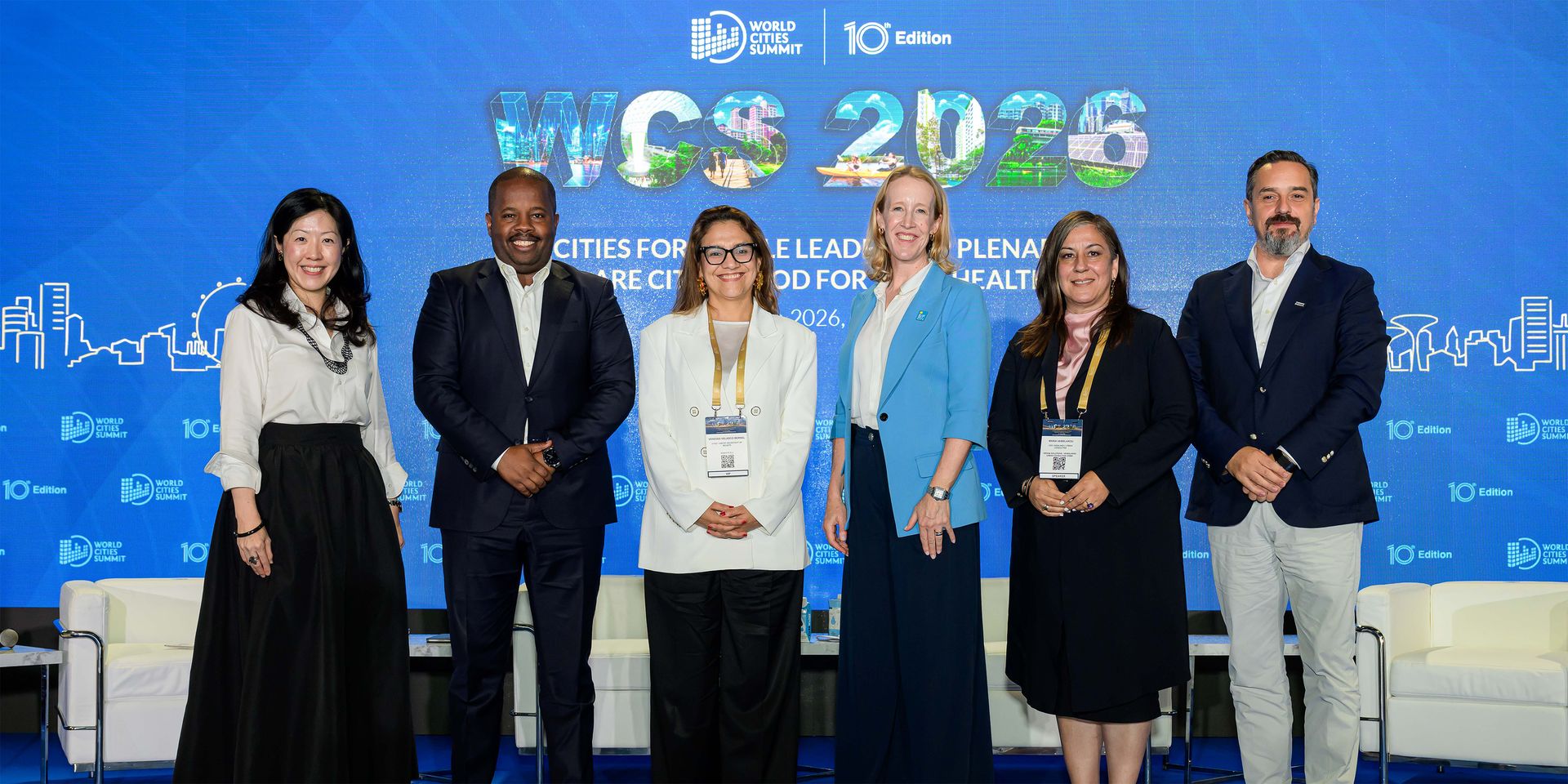
At the World Cities Summit 2026 “Cities for People” thematic track, Mr Robert Hanea, Founder and Chief Executive Officer of Therme Group, shared why cities need to rethink how they are designed to better support people's health and wellbeing.
Cities today are largely designed around productivity, mobility and efficiency. While these systems have enabled growth and convenience, they often leave limited space for people to rest, recover and reconnect. In dense, fast-paced cities, this can contribute to rising stress, burnout and mental health challenges.
A key insight from the session was the need to address the “restorative space gap”. While cities are well equipped with infrastructure that moves people efficiently, there are fewer spaces intentionally designed to support recovery, social connection and wellbeing. The next frontier of urban planning is not just building efficient cities, but creating environments that actively support better physical, mental and social health.
Mr Hanea emphasised that wellbeing should be seen as an essential part of civic infrastructure, rather than a lifestyle choice. Just as cities invest in transport, housing and public amenities, they must also invest in environments that support restoration through nature, water and shared experiences. These are not simply amenities, but foundations for public health, social cohesion and urban resilience.
Singapore faces a rapidly ageing population, with around one in four residents expected to be aged 65 and above by 2030. In this context, the need to support preventive health, active ageing and social connection is becoming increasingly important. In a dense and fast-paced city, wellbeing needs to be woven into everyday urban life. This is the context in which large-scale social wellbeing destinations such as Therme Singapore are being explored, as part of a broader ecosystem of accessible shared spaces that support preventive health, inclusion and intergenerational connection.
The discussion highlighted an important shift in urban thinking: from designing cities primarily for movement and productivity, to creating cities that also enable people and communities to flourish.